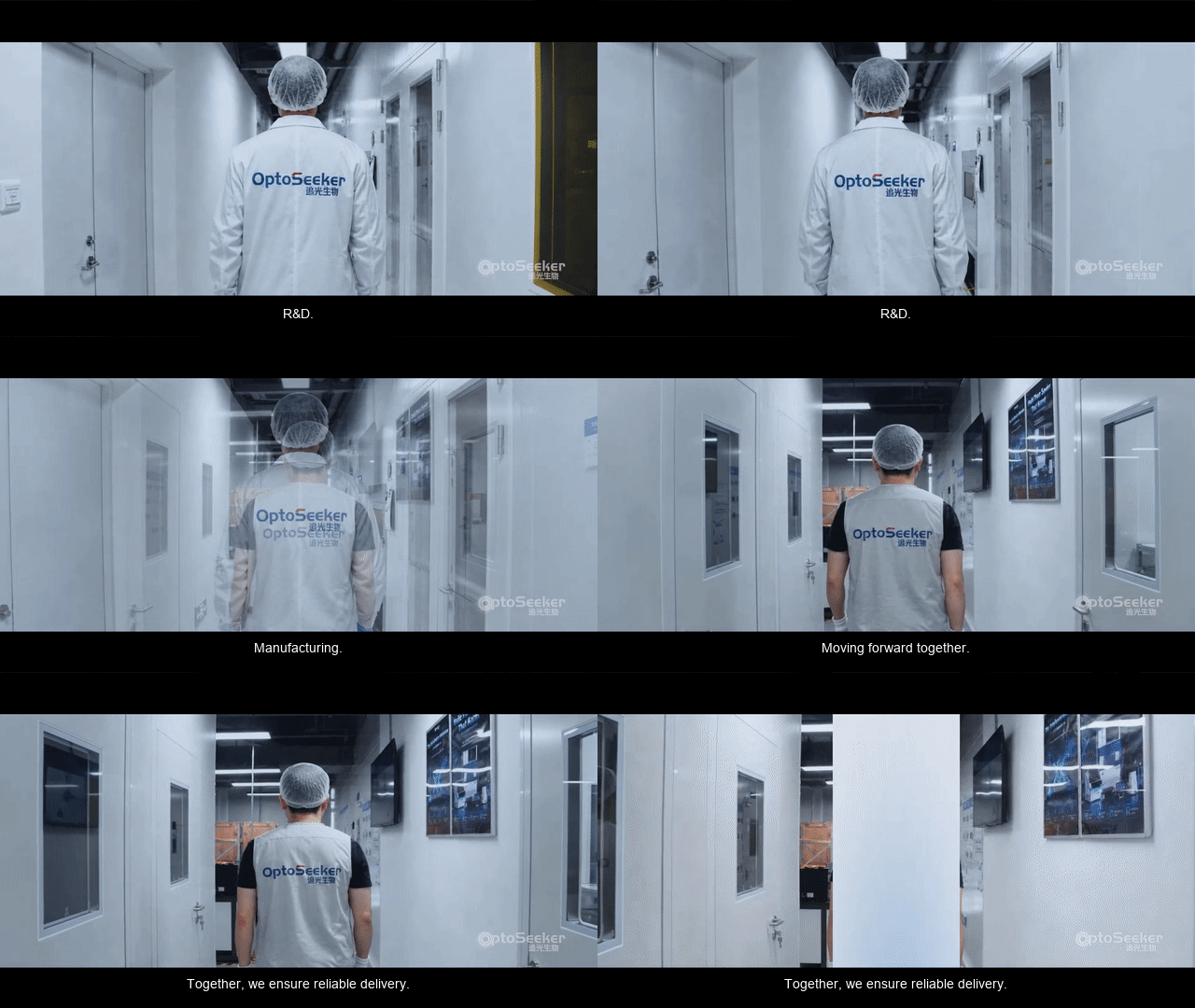


How Is a High-End Life-Science Instrument Manufactured?
For a complex life-science instrument that integrates optical, mechanical, electronic, fluidic, software, and biochip modules, the answer is clearly more than simply assembling components.
Especially when a product is still undergoing continuous iteration and its design versions, process requirements, and quality standards are constantly being updated, the real challenge is to translate the design and process requirements verified during R&D into manufacturing standards and apply them consistently to every product that follows. From translating R&D design into manufacturing standards, to material preparation, assembly and commissioning, in-process inspection, exception handling, and final release, every step must operate under controlled conditions.
For OptoSeeker Biotech, the core of high-end life-science instrument manufacturing is not only building an instrument, but also establishing a production capability that can consistently reproduce product quality. This capability is embodied in OSPS (OptoSeeker Production System), the production-management system built in-house by OptoSeeker.
The answer to this question is not in the laboratory, but on the manufacturing floor. Next, we step into OptoSeeker Biotech's manufacturing site to see how this system turns R&D results into products that can be delivered reliably.
OptoSeeker Biotech's Manufacturing Floor and OSPS Lean Practice
Stable Manufacturing Begins by Reducing Uncertainty on the Floor
Continuous product iteration is normal for an R&D-driven instrument company. For the manufacturing floor, however, the more things change, the more clearly defined the operating order must be.
At OptoSeeker, 5S—Sort (Seiri), Set in Order (Seiton), Shine (Seiso), Standardize (Seiketsu), and Sustain (Shitsuke)—is not a superficial housekeeping exercise. It is foundational work on the manufacturing floor and the starting point for reducing uncertainty. Tools have designated locations, materials are zoned, status is clearly marked, and products are returned to their assigned places. Where a tool is kept, which area a material belongs to, and the current status of an instrument must all be clear at a glance.
These actions may look basic, but they address some of the easiest manufacturing problems to overlook: reducing searching, picking up the wrong item, and repeated confirmation, so that exceptions surface earlier.
Once order is established on the floor, manufacturing has a stable starting point.
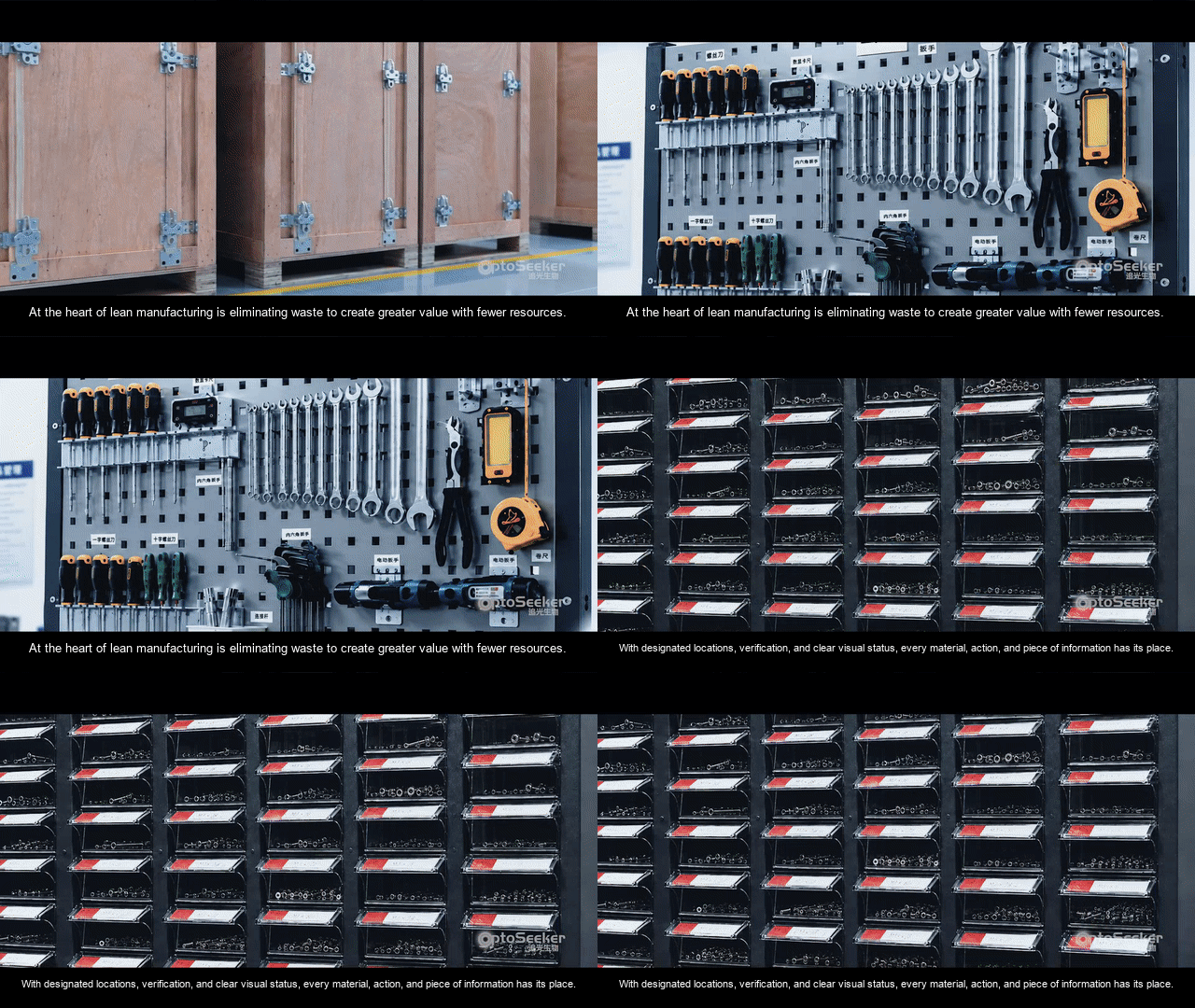
Designated Material Locations and Tool Management on the Manufacturing Floor
OSPS Brings Standards into the Manufacturing Process
If order on the floor addresses uncertainty in physical space, OSPS addresses uncertainty in information.
At every moment during manufacturing, a product has a set of key states that must be confirmed: Are all materials complete? Is the latest process being followed? Is the current operation complete? Has quality been confirmed? Has the exception been closed out? This information is distributed across different steps and people. If it is not synchronized, even a well-organized physical environment cannot ensure that every step operates under controlled conditions.
OSPS brings these states together under one manufacturing task. As a production-management system built in-house by OptoSeeker, it spans the complete workflow from reagent production to instrument assembly and from in-process inspection to outgoing inspection. Every status is linked in real time and traceable throughout the process, ensuring that manufacturing continues under controlled conditions.
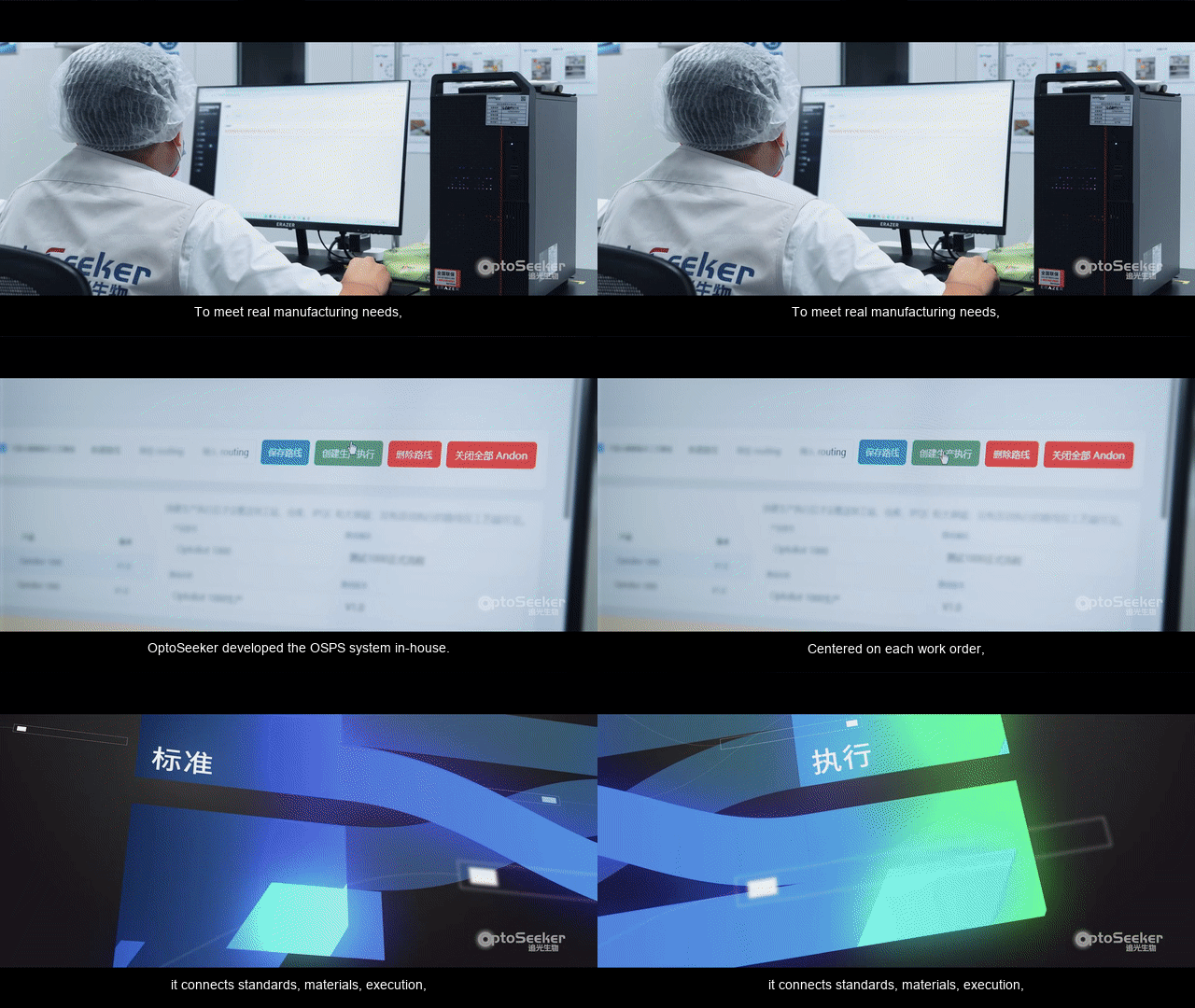
OSPS links work orders, standards, materials, execution, and inspection status
Standardization: Turning R&D Requirements into Actions the Floor Can Execute
Lean manufacturing begins with standards. The design, process, and inspection requirements confirmed by R&D must be further translated into content that floor personnel can execute unambiguously. Through ESOP (Electronic Standard Operating Procedure), the form in which standard work is implemented on the manufacturing floor, complex technical requirements become clear and stable execution conditions, so manufacturing no longer depends on individual interpretation.
Once a standard is established, the next question is whether all conditions required to execute it are ready.
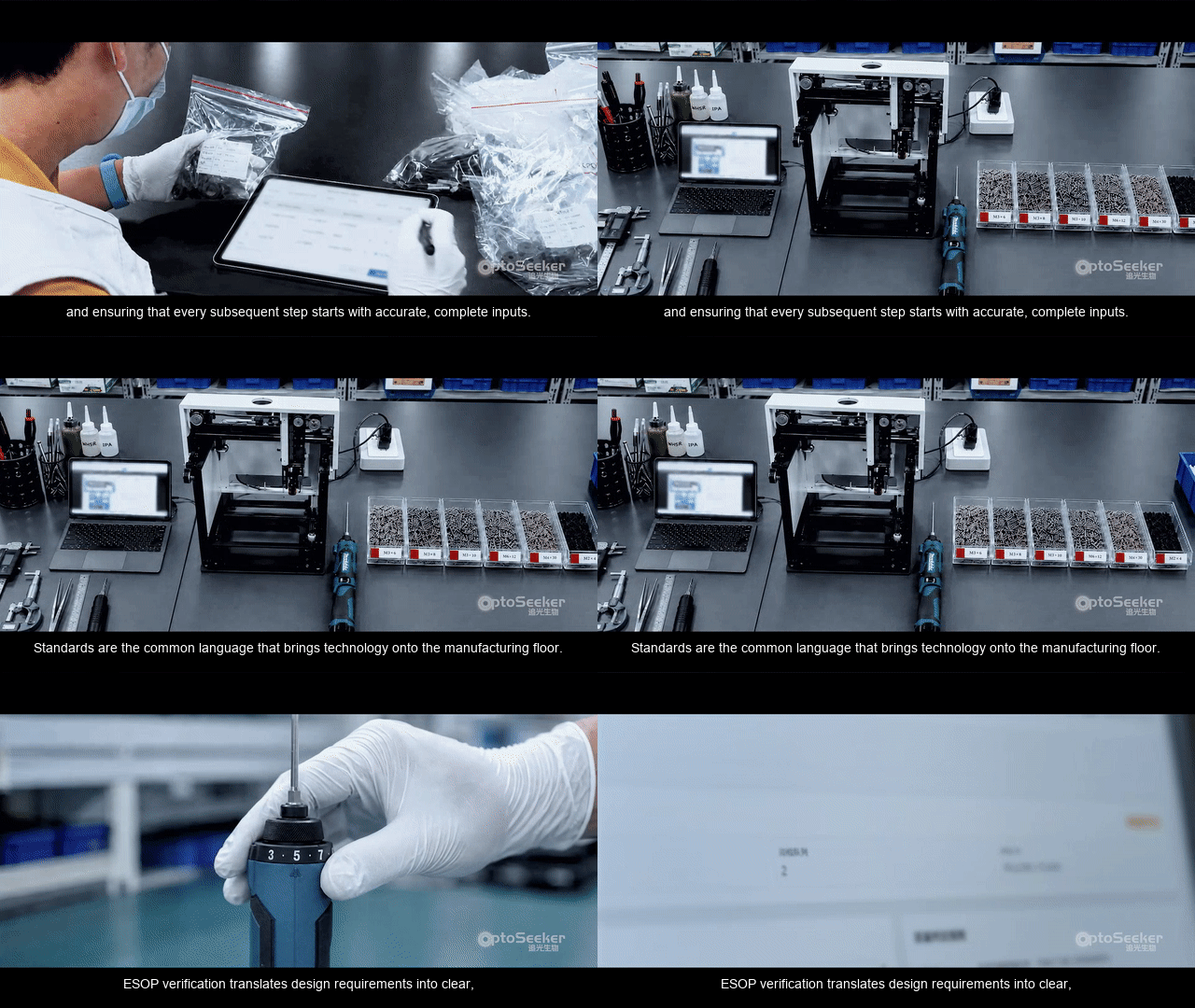
Translating R&D design requirements into standard work that can be executed on the manufacturing floor
Controlled Conditions: Before Starting, Confirm That Everything Is Ready
Before manufacturing begins, materials, quantities, and tasks are matched item by item. For material delivery, OptoSeeker uses an OSPS-managed Milk Run system to deliver materials to each workstation at the right time, location, and quantity according to the task rhythm, reducing ad hoc material requests, waiting, and mismatches. This reflects the Just-in-Time principle of lean production: the right material enters the right place at the time it is needed.
Only after the required conditions have been confirmed can the subsequent execution begin from the right starting point.
Once standards are in place and materials are ready, how is quality ensured during execution?
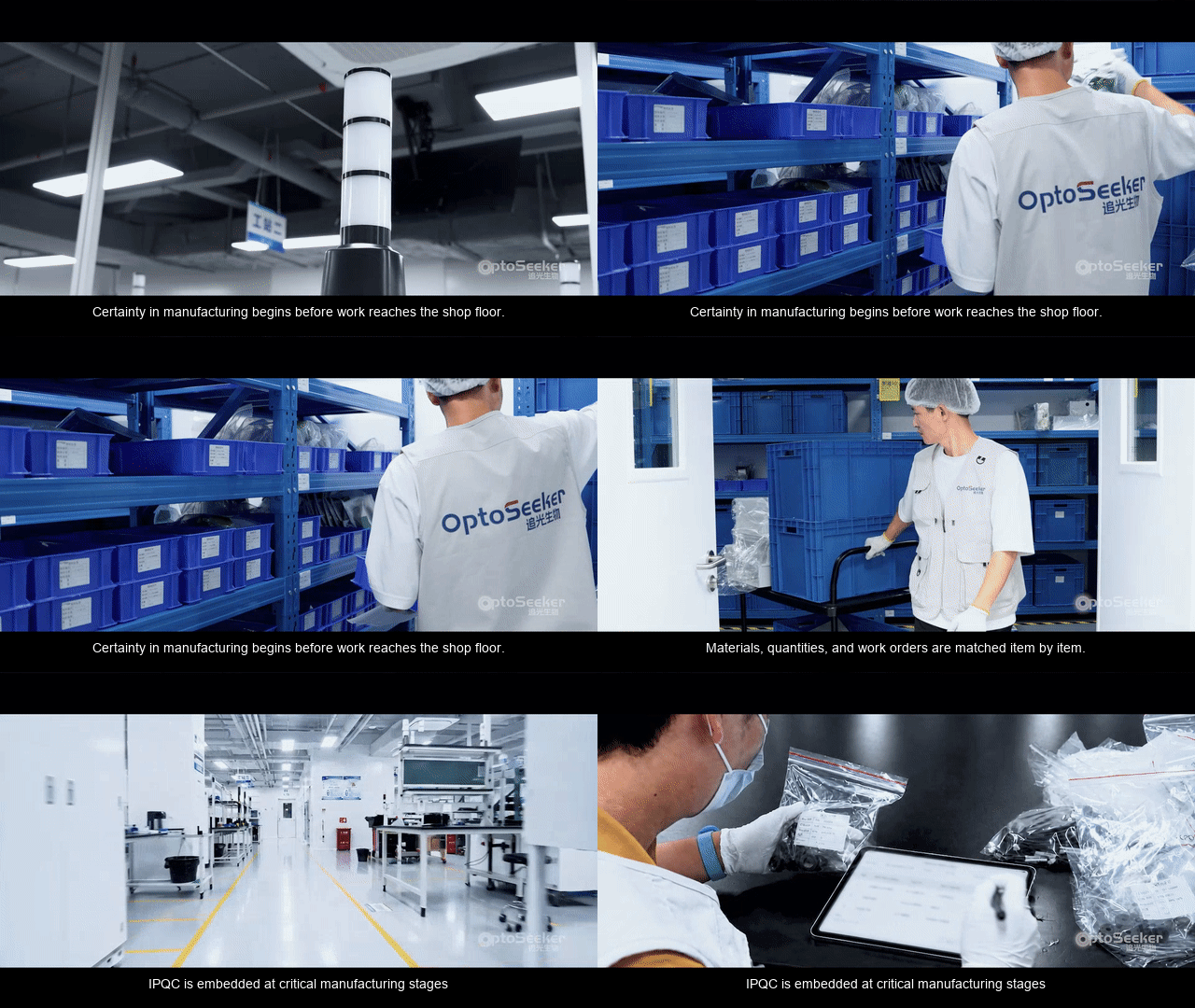
The Milk Run system delivers materials accurately according to the task rhythm
Quality Control Is Part of the Manufacturing Process Itself
Quality is not something checked only after the complete instrument has been assembled. IPQC (In-Process Quality Control) is embedded at critical manufacturing checkpoints: after a key operation is completed, it is confirmed before the process moves to the next stage. The purpose is to identify and contain an abnormal product state at the operation where it occurs, rather than allowing it to flow downstream.
Before a product leaves the factory, OQC (Outgoing Quality Control) holds the final gate and confirms that the complete instrument released for shipment meets the standards. This means quality control itself is part of the manufacturing process: from in-process operations to outgoing inspection, every key stage has a defined quality confirmation rather than a one-time check at the end.
Even when standards are clear, materials arrive on time, and quality is controlled, deviations may still occur during manufacturing.
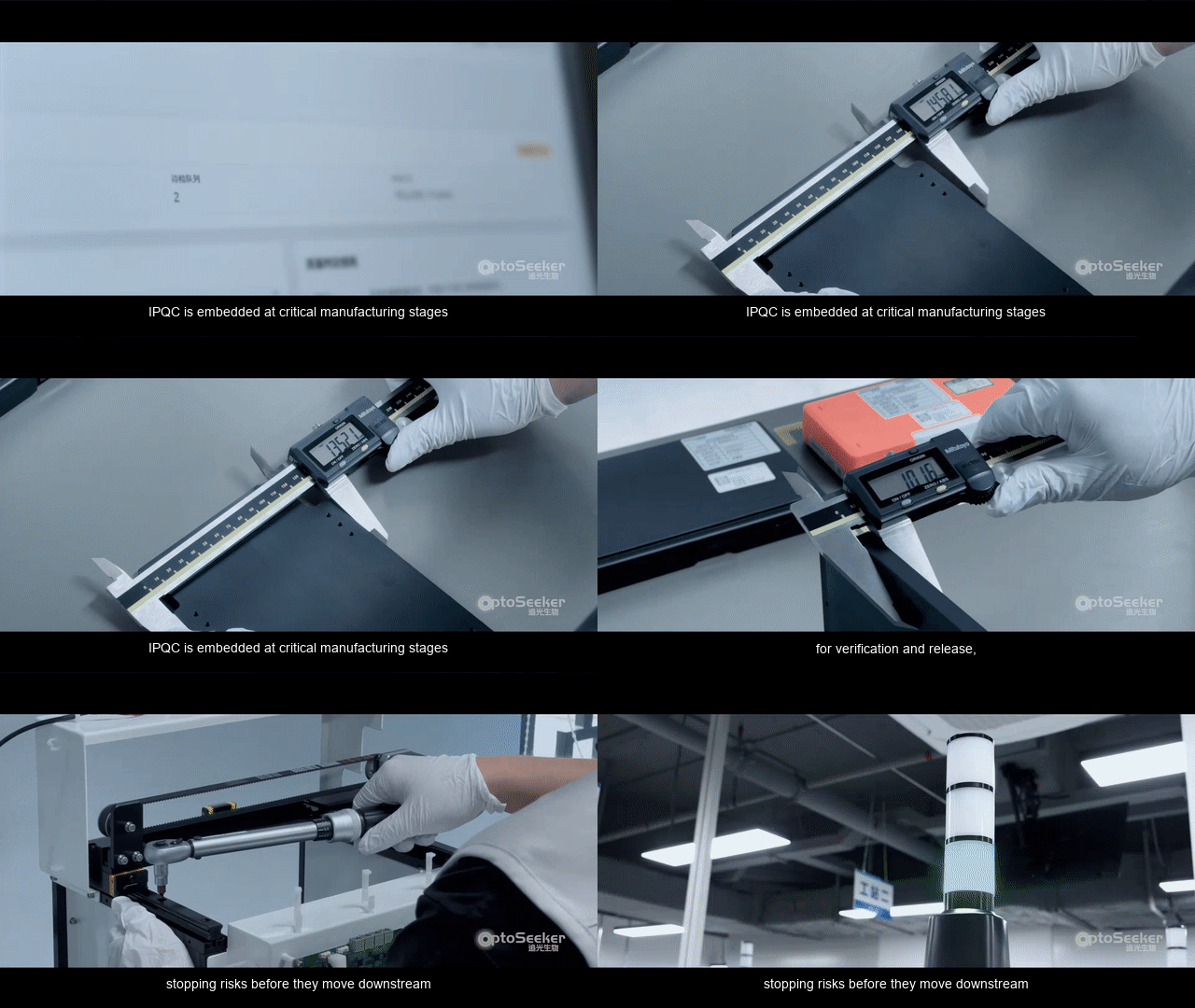
IPQC is embedded at critical manufacturing checkpoints to contain process risks in time
Turning Floor Problems into the Next Set of Manufacturing Standards
When a deviation occurs during manufacturing, Andon, the abnormality-response mechanism, initiates a coordinated response. Relevant personnel go to the site to confirm the problem, analyze its cause, and complete the corrective action.
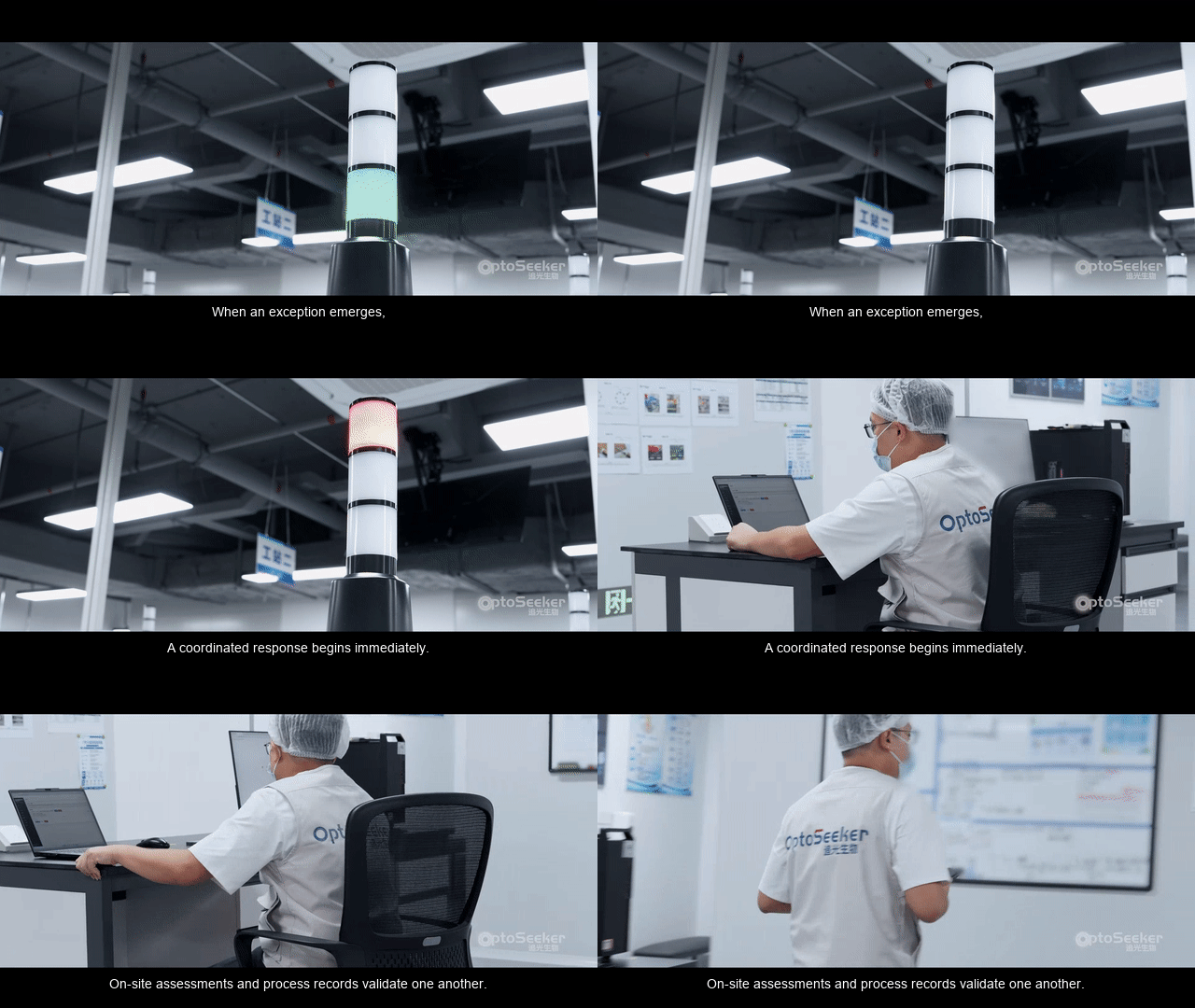
Exception response and operation confirmation work together to contain problems within the manufacturing process
Solving a problem restores production; turning the solution into a new executable standard is what constitutes continuous improvement (Kaizen).
After an exception is closed, the work order, inspection results, and handling records are retained to trace the source of the problem: Was it an operating deviation, an insufficiently clear process requirement, or an opportunity to optimize the product design? Content requiring adjustment is fed back to process engineering and R&D and incorporated into subsequent manufacturing standards.
In this way, a manufacturing problem completes a closed loop from “discovery” to “resolution” and then to “experience capture.” This is how PDCA (Plan–Do–Check–Act) truly works on the manufacturing floor: standards and tasks enter execution, manufacturing results are confirmed through inspection and on-site review, problems are handled, and the experience is captured as new requirements for the next production cycle.
For life-science instruments that undergo continuous iteration, this cycle is particularly important: R&D requirements enter manufacturing, manufacturing problems drive improvements in R&D and process engineering, and the changes enter the next production cycle. Floor problems therefore no longer remain at the level of “fixing this one unit”; they gradually become manufacturing experience for every product that follows.
The ability to move from making one unit to making every unit reliably comes from this continuous closed loop.
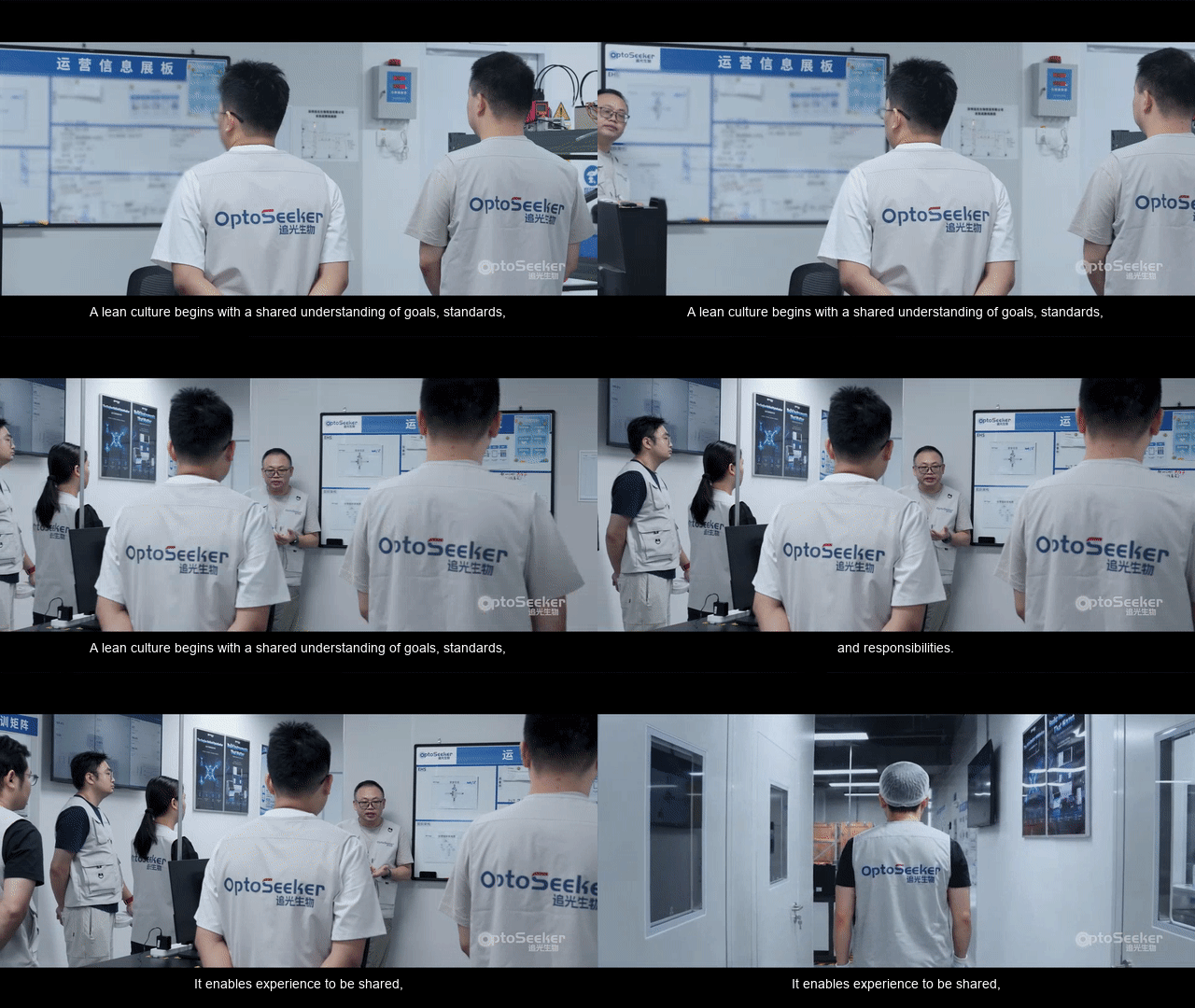
Closed-loop problem solving captures experience and drives lean improvement and manufacturing-system upgrades
The Manufacturing System Must Evolve with the Product
For an R&D-driven life-science instrument company, lean manufacturing is not a project that can be “completed,” but an activity of continuous improvement. As products expand and evolve, the manufacturing system must evolve with them.
As product versions, process requirements, and delivery volumes change, the work standards, quality controls, material-management practices, and exception-handling mechanisms in OSPS continue to be upgraded. Problems identified on the floor are recorded, analyzed, and fed back to process engineering and R&D before being translated into new manufacturing requirements. Each adjustment makes production of the next product more certain. The system continues to evolve toward faster flow, a more stable floor, and greater visibility across the whole operation.
Lean improvement is therefore not an additional set of management actions. It continuously eliminates waste from manufacturing, reduces uncertainty in the process, and ensures that validated methods are implemented reliably in the next product.
Every instrument that leaves the line carries a little more experience; every instrument grows together with the factory.