


Under a microscope, light is usually used to observe samples.
In more advanced experimental systems, however, light is no longer only an imaging tool. It can also serve as a spatial instruction: where light is delivered, a reaction occurs; how the light pattern is shaped, the sample receives corresponding spatial information.
This is the core value of patterned UV projection.
By spatially modulating light patterns with a digital micromirror device (DMD), UV light can be projected onto selected regions within the microscope field of view, enabling micron-scale patterned exposure.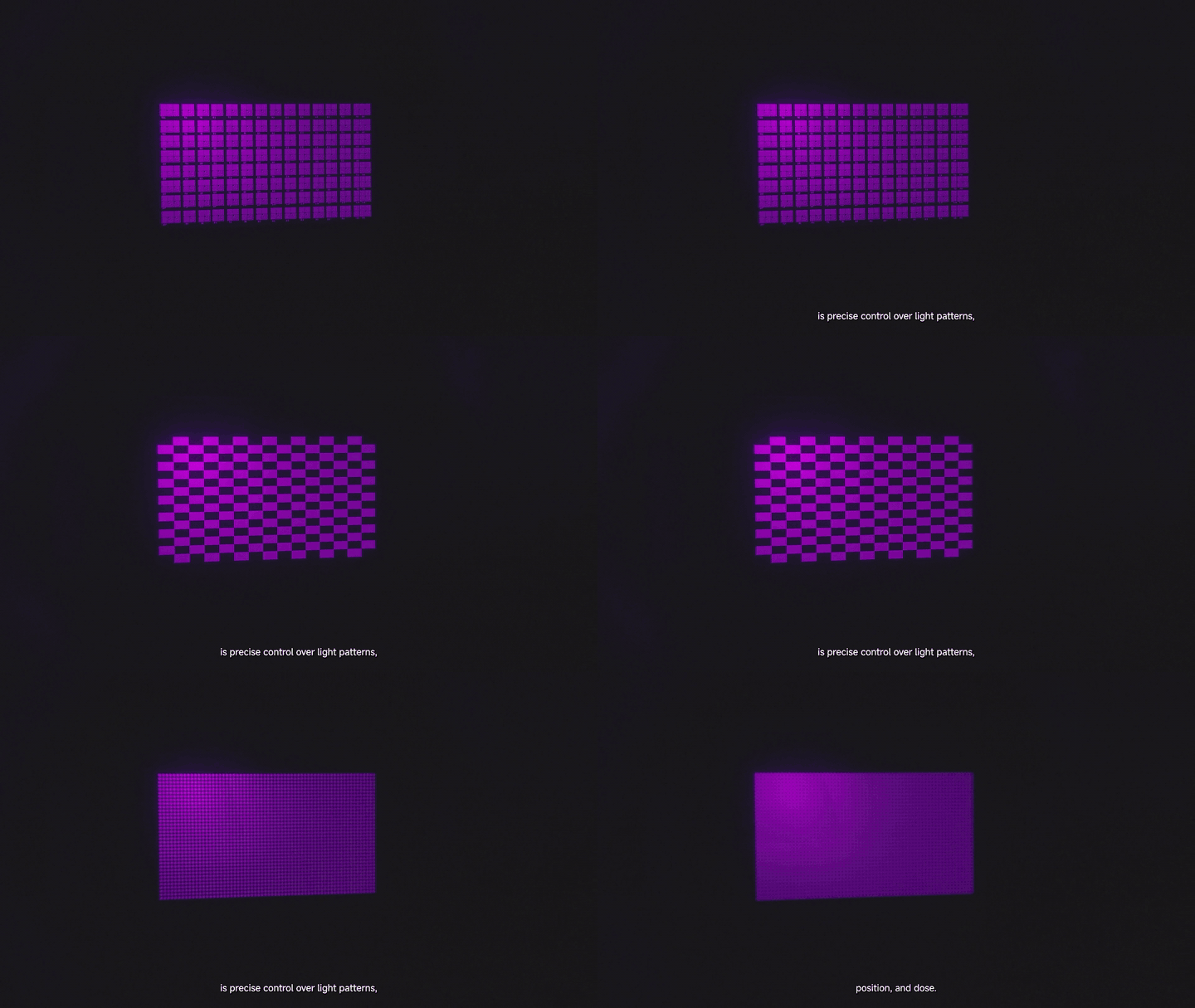
Instead of uniformly illuminating an entire area, the system projects shapes, paths, boundaries, arrays, and gradients directly onto the sample plane, turning light into a programmable tool for micro-/nanofabrication and biological interface modulation. In other words, UV projection brings the “design blueprint” directly into the microscopic world.
Microtopography Construction: Using Light to Define the Spatial Boundaries Cells Encounter
In cell-based experiments, the cellular environment is not merely a passive substrate for cell placement. It directly influences cell growth, migration, and morphology. Cells continuously sense the spatial structure of their microenvironment, including geometry, surface roughness, boundary shape, pore size, groove orientation, and array topology. In other words, cells perceive not only nutrients and biochemical cues in the culture medium, but also the “spatial terrain” of the surface to which they adhere.
Microtopography construction is one of the most intuitive applications of patterned UV projection.
By modulating UV light patterns through a DMD, the system can project predefined designs directly onto photosensitive materials or photocurable systems, enabling localized crosslinking, curing, or structural formation at the micron scale. Arrays, grids, micropillars, micropores, grooves, scaffold structures, and other microstructures can be converted from software-defined patterns into physical structures.
The key difference from conventional photolithography is that the structure no longer depends on a fixed photomask. It is defined by software.
When an experiment requires changes in pore size, spacing, line width, pattern density, or local boundary geometry, there is no need to fabricate a new mask. Researchers only need to modify the projection pattern. For studies of cell adhesion, migration, polarization, morphology maintenance, and mechanobiological response, this means that microstructures can shift from being fixed experimental consumables to tunable experimental variables. More importantly, microtopography is not about producing visually appealing patterns; it is about building reproducible, comparable, and quantifiable cell microenvironments.
When multiple topographic structures can be constructed in parallel on the same sample, researchers can more rapidly determine what type of spatial boundary cells prefer, which geometries promote spreading, and which microstructures are more likely to induce directional migration or organized alignment.
Here, UV light is not used for illumination. It directly constructs cellular microenvironments through photocuring.
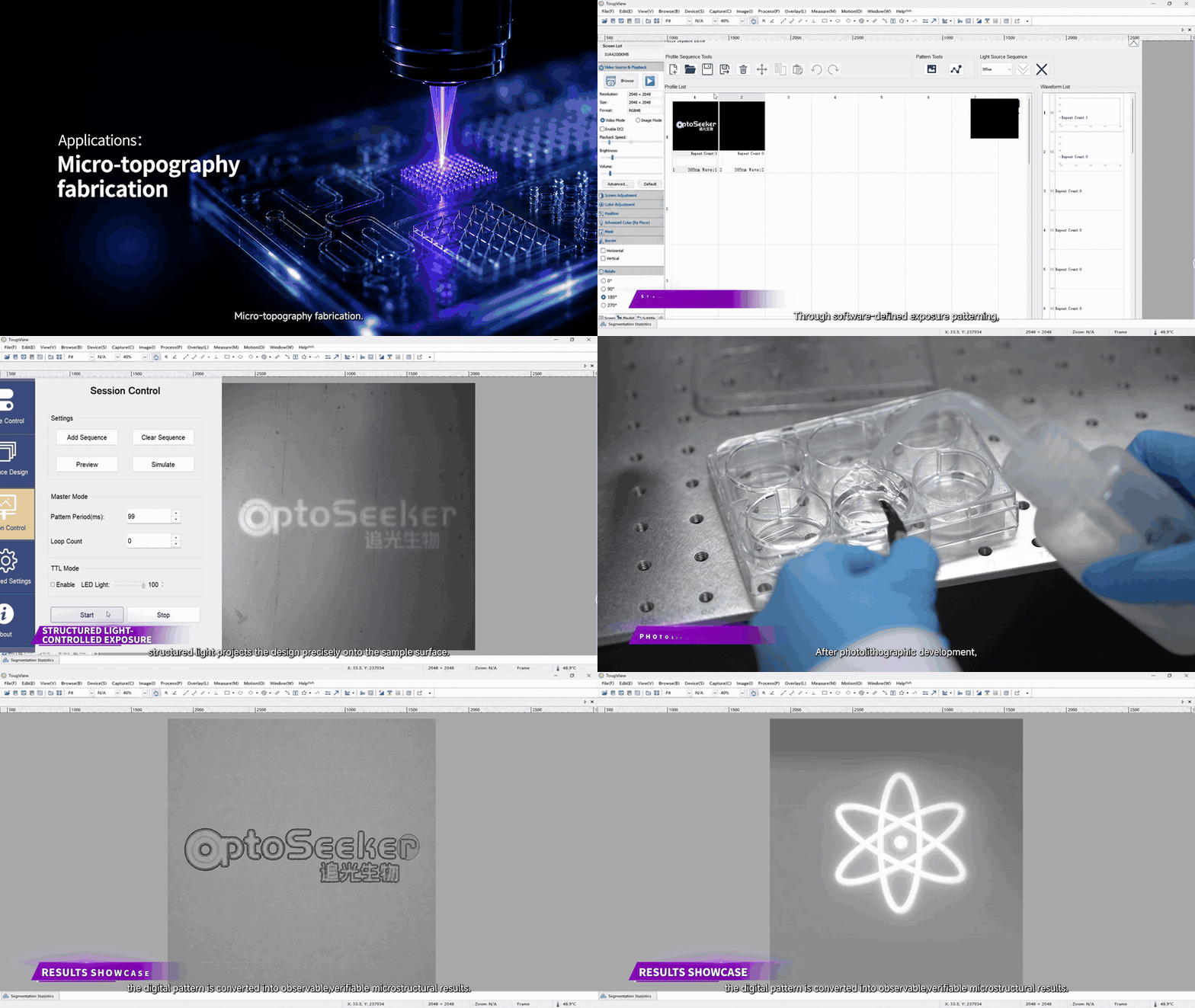
Patterned UV projection directly converts predefined designs into micron-scale topographic structures
Building 3D Cell Culture Structures: Allowing Cells to Grow in Designed Three-Dimensional Spaces
Two-dimensional culture addresses the question of whether cells can survive. In many cases, however, it cannot adequately recapitulate how cells behave in real tissues.
Real tissues are not flat. Cells reside in three-dimensional spaces and are influenced by the surrounding matrix, spatial confinement, nutrient diffusion, intercellular distance, and mechanical environment. Therefore, when research moves from monolayer cells to organoids, microtissues, tumor models, neural networks, or immune cell interactions, conventional 2D culture is often insufficient.
A second key value of patterned UV projection is the construction of 3D cell culture structures.
Through localized UV exposure of photosensitive hydrogels, biocompatible polymers, or crosslinkable scaffold materials, three-dimensional or quasi-three-dimensional culture units can be built under microscopic observation. Cells can be confined within defined spaces or guided to grow, aggregate, and interact along predefined channels, chambers, or scaffold structures.
The purpose of these structures is not simply to “contain” cells. It is to actively define the spatial rules that cells experience.
For example, microchambers can control the size of cell clusters and reduce batch-to-batch variation caused by random aggregation. Scaffold structures can guide cells to extend along specific directions. Locally open or closed spaces can regulate nutrient exchange, factor diffusion, and modes of cell-cell contact. In 3D culture models, these parameters directly affect the morphology and functional state of the resulting cellular tissue.
This is particularly important for drug screening and disease modeling.
If 3D culture structures are poorly controlled, experimental results can easily be confounded by structural variability. In contrast, when spatial boundaries, culture unit dimensions, and local organization can be designed, model consistency and interpretability improve substantially.
In this context, UV projection provides the ability to build cell culture spaces on demand.
Cells no longer randomly settle on a material surface. Instead, they grow within predesigned three-dimensional microenvironments. For applications such as organoids, tumor microenvironment modeling, immune killing assays, neural cell networks, and early-stage tissue engineering validation, this level of structural control can determine whether an experiment is reproducible and scalable.
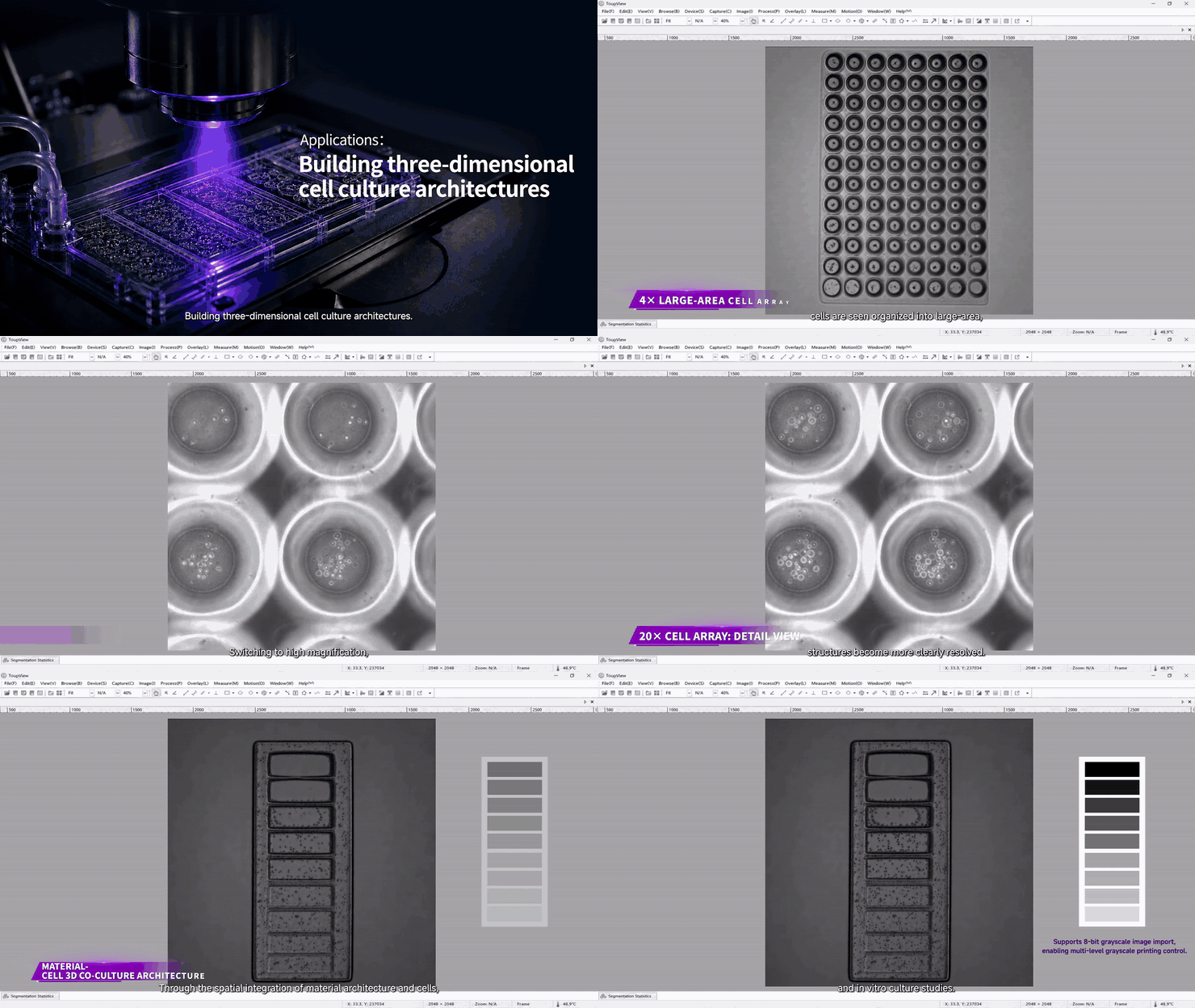
Localized photocuring enables the construction of 3D culture microstructures, providing controlled spaces for cell growth and interaction
Patterned Surface Modification: Positioning Biological Functional Signals Where They Are Needed
The environment that cells truly sense is not only about stiffness or flatness. It also depends on what molecules, particles, or functional cues are presented on the surface.
The spatial distribution of extracellular matrix proteins, antibodies, ligands, peptides, adhesion molecules, functional proteins, extracellular vesicles, nanoparticles, nucleic acid barcodes, and other biological functional units can directly influence whether cells adhere, how they spread, whether they migrate or differentiate, and whether they engage in specific interactions with other cells or material interfaces.
This makes patterned surface modification a third important application scenario for patterned UV projection.
In this application, UV projection can regulate the chemical activity, hydrophilicity or hydrophobicity, binding capacity, or reactive sites of different regions on a carrier surface. As a result, specific biological functional molecules, particles, or labeling units are more likely to appear at designed positions. Through predefined light patterns, researchers can generate localized functional regions on the carrier surface, creating stripe, dot-array, gradient, boundary, or multi-region patterned distributions.
Simply put, functional molecules are no longer coated uniformly across the entire surface. They are placed where they are supposed to be.
This matters greatly in cell experiments and bioanalysis.
If surface signals are uniformly distributed, cells receive an averaged stimulus. If different functional regions are presented in a patterned manner, cells encounter a microenvironment with directionality, boundaries, and spatial heterogeneity. Researchers can then ask more precise questions: Do cells migrate along a specific pattern? Do they adhere only to selected regions? Do they show different morphologies under different signal densities? Do they exhibit selective behavior between multiple functional regions?
This patterned surface modification capability can also be extended to a wider range of biological functional objects. For example, Eduardo Reátegui and colleagues at The Ohio State University published work in Nature Methods demonstrating light-induced, controlled adsorption and micropatterned arrangement of extracellular vesicles and particles on surfaces. This approach can support single-particle analysis, immune-related research, and the construction of cell-cell communication models [1]. This indicates that patterned illumination is not limited to protein patterning; it can also become a broader tool for positioning biological functional particles.
Meanwhile, the significance of optical patterning is not limited to cell culture surfaces. Methods such as Light-Seq provide another direction. Peng Yin and colleagues at Harvard University published work in Nature Methods using light to select defined spatial regions in fixed cells or tissues, label biomolecules in situ with DNA barcodes, and subsequently perform spatially indexed sequencing [2].
This suggests that patterned UV projection may also be combined with region-selective labeling, spatial omics, and tissue section analysis to connect “visible morphological regions” with “measurable molecular information.”
Such capabilities are especially suitable for cell adhesion studies, migration assays, neurite guidance, immune synapse models, cell-material interface evaluation, biomaterial functionalization screening, extracellular vesicle or particle array construction, and region-selective molecular labeling and spatial omics analysis in cell or tissue samples.
Future cell culture substrates, chip materials, microtissue scaffolds, bioreactor interfaces, and spatial analysis platforms should not remain passive carriers. They should encode defined spatial signals and support downstream imaging, molecular detection, or sequencing analysis. UV projection upgrades carrier surfaces from ordinary material interfaces into designable, addressable, and readable biological functional interfaces.
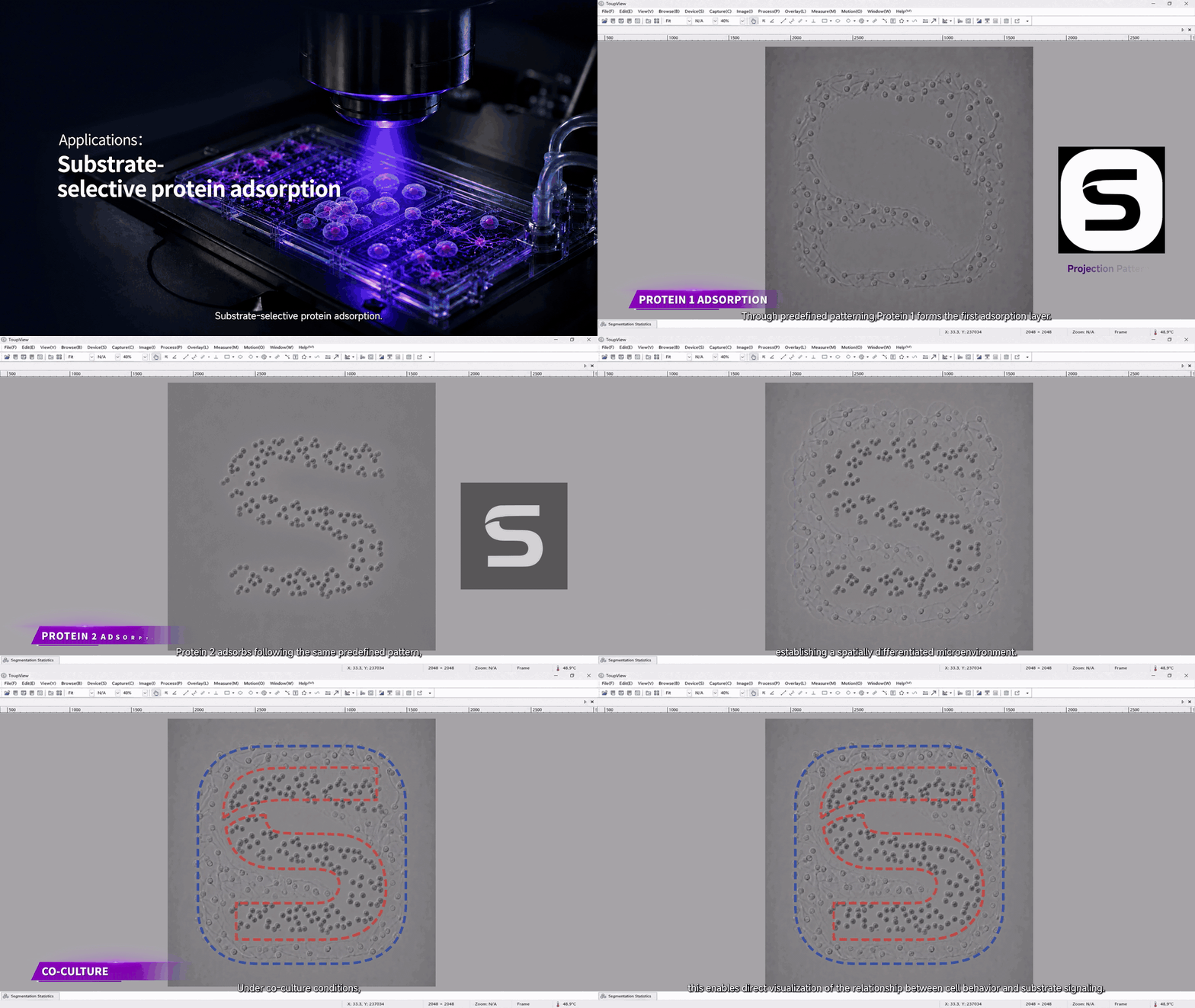
Spatially selective surface modulation enables targeted protein adsorption and patterned distribution on carrier substrates
Combined Use with OptoGrow®: From Building Microenvironments to Observing Cellular Responses
If patterned UV projection addresses how to build a microenvironment, a live-cell incubation system addresses another equally critical question: how cells can grow stably within that microenvironment and be continuously observed. This is the value of combining OptoNeuroBot® with OptoGrow®.
In microtopography construction, 3D culture structures, and surface functionalization experiments, researchers are usually not interested only in whether the pattern looks good immediately after exposure. The real question is how cells respond to these structures over the following hours, days, or even longer periods. Do they migrate directionally along grooves? Do they adhere to specific protein regions? Do they form more consistent cell clusters in microchambers? Do immune cells maintain sustained contact with target cells within confined spaces? Do neurons extend neurites along predefined paths and form networks?
These questions cannot be answered by a single endpoint image. They require a stable live-cell culture environment. The OptoGrow®Stage-top Live Cell Incubator System provides controlled cell culture conditions directly on the microscope stage. Through CO₂ mixing, humidification, and incubation modules, the system maintains stable temperature, humidity, and CO₂ conditions for samples while supporting long-term live-cell imaging. For patterned illumination experiments, this means that cell samples after photocuring can remain within the microscope field of view and be dynamically observed under more stable culture conditions, instead of being repeatedly transferred between a conventional incubator and the microscope.
This may appear to be a simple supplement to culture conditions, but it directly affects data quality.
On one hand, long-term experiments are highly sensitive to temperature stability, humidity control, and culture medium evaporation. In microstructures, microchambers, or small-volume culture systems, liquid volumes are smaller, and evaporation, osmotic pressure changes, and pH fluctuations can amplify experimental error. On the other hand, cell migration, morphological remodeling, neurite outgrowth, immune killing, cell cluster formation, and organoid development are all dynamic processes. Only continuous imaging can capture real behavioral trajectories, rather than a static endpoint. Therefore, the combination of OptoNeuroBot® and OptoGrow® is not a simple stacking of hardware. It connects the experimental workflow into a closed loop: first, patterned light defines the microenvironment; then cells enter that microenvironment under stable culture conditions; finally, long-term live-cell imaging records changes in cell behavior.
This extends the application boundary of patterned UV projection from microstructure fabrication to live-cell microenvironment experiments. It not only creates micron-scale structures, but also helps answer how cells read these structures, adapt to them, and generate quantifiable functional differences within them.
This combined workflow is particularly important for cell migration, cell adhesion, organoid culture, tumor microenvironment models, immune cell killing assays, neurite guidance, and early-stage tissue engineering validation. These studies do not simply require a one-time fabricated structure. They require observation of how living cells change within structures under stable, controllable, and imageable conditions.
From Structure Fabrication to Microenvironment Programming
These three applications may appear different, but they all point to the same idea: using light to turn experimental microenvironments into programmable objects.
Microtopography construction defines spatial boundaries. Three-dimensional cell culture structures define how cells organize in 3D space. Selective protein adsorption on carriers defines where functional molecules are positioned. The combined use of OptoGrow® adds another critical layer: how these designed microenvironments support continued cell growth under stable temperature, humidity, and CO₂ conditions while enabling long-term, continuous, low-disturbance observation.
This means patterned illumination should not be viewed merely as a microfabrication method. It is more accurately understood as a spatial definition module within a cell experiment system. OptoGrow® brings this spatial definition module into live-cell experimental workflows, creating a complete closed loop from microenvironment construction, cell culture, dynamic imaging, to behavioral analysis.
In the past, many cell experiments relied heavily on empirical procedures: how materials were treated, how proteins were coated, how cells were seeded, and how structures were formed. These steps often introduced substantial batch-to-batch variability. The value of patterned UV projection is that it converts these previously undercontrolled processes into patterns, parameters, paths, and workflows.
When the shape of light can be designed, material structures can be designed. When protein adsorption can be spatially positioned, cell signaling can be spatially positioned. When 3D culture spaces can be constructed, cellular organization has a greater chance of being reproduced consistently.
For life science tools, the significance is clear: experiments are no longer limited to observing what happens to cells. They can actively define what environment cells will encounter and continuously track how cells respond to that environment. This is why the combination of patterned illumination and live-cell incubation deserves close attention.
It is not merely an auxiliary light source on a microscope. Nor is it simply a miniaturized incubator. It introduces both spatial control and dynamic observation into cell-based experimental systems.
Light is becoming a spatial editing language for microscopic living systems. A stable live-cell culture environment allows that language to be read by cells, translated into biological responses, and converted into recordable data.
References:
1.Colin L. Hisey , Xilal Y. Rima,et al.Light-induced extracellular vesicle and particle adsorption.Nature Methods:2609-2621.(2025)
DOI.org/10.1038/s41592-025-02914-w
2.Jocelyn Y. Kishi , Ninning Liu,Peng Yin,et al. Light-Seq: light-directed in situ barcoding of biomolecules in fixed cells and tissues for spatially indexed sequencing.Nature Methods:1393-1402.(2022)
DOI:10.1038/s41592-022-01604-1